

















What Is Loan Underwriting? Process, Types and Best Practices
Every loan begins with a request. With it, the entire backend process begins. Risk assessment. Credit history. Personal details, et al. Borrowers’ data is always diverse. A borrower may have a stable income. Another may have a strong credit history. Some may have both. Others may have neither. Underwriting helps lenders sort through those differences before deciding whether to lend.
Since underwriting is the entry point, it protects more than a single loan. In fact, it influences the overall quality of the portfolio. Any negligence in underwriting or heavy reliance on manual input may exponentially jeopardize the portfolio's health. That is why modern loan underwriting software plays one of the most important functions in lending. Before a loan is approved, funded, or serviced, someone must determine whether the risk is worth taking.
What is Loan Underwriting?
Loan underwriting is the process lenders and lending institutions use to evaluate a prospect’s creditworthiness before disbursing the loan amount. And about the purpose? It is straightforward. Lenders want clarity. They have to determine whether the prospect would repay the loan and whether their behavior aligns with the lender’s risk policies. Without compliant underwriting practices, the evaluation weakens to a much greater extent.
To reach that decision, underwriters review several aspects of the applicant's financial profile. They do not confine themselves to assessing a single factor. For example, income helps establish repayment capacity. Employment history can provide insight into financial stability. Another element that significantly alters the underwriting trajectory is existing debt. If the borrower has to pay multiple lenders, they may have less capacity to take on additional payments. Now imagine that decision-making without underwriting is in action. Right!
Ultimately, the goal is not simply to approve or decline applications. It is to make informed lending decisions that balance growth opportunities with responsible risk management.
How Does the Loan Underwriting Process Work?
The loan underwriting process evaluates a borrower’s creditworthiness, financial information, and ability to repay a loan. Loan underwriting and loan decisioning work together to help lenders assess risk, evaluate applications, and determine whether to approve, decline, or send an application for further review. While underwriting focuses on assessing borrower risk, decisioning applies lending rules and criteria to determine the next step.
Application Information Is Collected
The steps involved are pretty simple. Just like every other official application submission, loan underwriting also begins right when an applicant submits an application. And this is exactly the stage at which lenders gather all the necessary information. This often includes personal information, employment details, income records, and other financial data relevant to the loan. Missing details, inaccurate records, or incomplete applications can make the evaluation process more difficult. A strong loan underwriting software review depends on a strong foundation. That foundation begins with the information collected during the application stage.
Eligibility Requirements Are Reviewed
The first review focuses on qualification. Before lenders assess risk, they need to determine whether the applicant meets the basic requirements for the loan. These requirements are established by the lender and can vary by product. Factors such as minimum income, employment status, age, residency, and loan amount limits may be reviewed at this stage.
An application that fails to meet these requirements may not move forward for further evaluation. This step serves an important purpose. That said, loan underwriting software prevents lenders from spending time reviewing applications that fall outside their lending criteria.
Financial Information Is Verified
Information provided in an application must be reliable. For that reason, lenders often verify key financial details before making a decision. Income may be confirmed through supporting documents. Doing verification helps lenders make decisions based on facts rather than assumptions. As a result, verification also reduces the possibility of errors that may distort the underwriting process, provided that your company has well-developed loan underwriting software in place.
Risk Is Evaluated
Meeting the minimum requirements for a loan does not automatically make an applicant a good lending risk. Qualification and creditworthiness are not the same thing. A borrower may satisfy income requirements and still carry significant debt. Another may have steady employment but a history of missed payments.
That said, the best move underwriters have in this regard is to look beyond basic eligibility. From credit history to debt obligations to repayment capacity, every factor contributes to risk assessment. The objective is to determine whether the applicant can reasonably manage the loan and whether the risk aligns with the lender's policies. Once done, the loan underwriting software marks the applicant as eligible for further lending operations.
A Lending Decision Is Made
Once the review is complete, a decision is reached. Some applications are approved because they meet both eligibility and risk requirements. Others may be declined when the risk exceeds the lender's tolerance. Certain cases may require additional information before a final determination can be made. The outcome is not simply about saying yes or no. It is the result of the information gathered and the risk assessment performed throughout the underwriting process.
Documentation Is Maintained
The underwriting process does not end when a decision is made. Lenders maintain records of the application, supporting information, and the final decision using loan underwriting software. Those records create a documented history of how the loan was evaluated. Good documentation supports internal reviews, policy oversight, reporting requirements, and future audits. Just as importantly, it helps lenders understand the reasoning behind decisions long after the application has been processed.
What are the Common Types of Loan Underwriting?
The common types of loan underwriting include manual, automated, and hybrid underwriting. Each type has some distinguishing features that align with different lending operations.
Manual Underwriting
As the name indicates, manual underwriting relies only on human review. This means no automated eligibility checks. No system-run verifications or data pulls. An underwriter examines the application and supporting documents. That said, the review often involves professional judgment and individual assessment.
This approach remains valuable in situations where applications do not fit neatly within standard lending criteria. Speaking of strengths, the biggest one is flexibility. An experienced underwriter can evaluate context that may not be fully reflected in a credit score or automated decision model.
Automated Underwriting
Automated underwriting uses predefined rules and decision criteria to evaluate applications. The system reviews applicant information against established lending policies and produces a decision based on the available data. This process can occur within seconds, allowing lenders to handle larger application volumes efficiently.
The biggest advantage of implementing an automated underwriting practice is consistency. The loan underwriting software is solely responsible for eligibility checks, data pulls, and verifications. Meaning that even if the loan volume increases, the loan underwriting software will apply the same rules to every application, ensuring consistency across the lending operations.
Hybrid Underwriting
Many lenders use a combination of automation and human review. Under hybrid loan underwriting software, applications are evaluated automatically at the initial stage. Prospects with an aligned set of requirements may receive an immediate decision. On the other hand, borrowers with complex needs are directed to an underwriter for additional review.
Hybrid loan management software can support this approach by connecting underwriting workflows with loan processing, servicing, and borrower management. This allows lenders to benefit from automation without eliminating human oversight, creating a practical balance between operational efficiency and effective risk management.
Loan Underwriting Best Practices
Loan underwriting does not happen by accident. Clear policies and informed decision-making help lenders assess risk and maintain consistent outcomes. While every lender operates differently, certain practices remain important regardless of loan type or portfolio size. Advanced loan management software can support these practices by streamlining workflows, centralizing borrower information, and helping lenders apply lending policies more consistently.
Establish Clear Lending Policies
When expectations are unclear, underwriting becomes difficult. Many companies and organizations are succumbing to operational inefficiency. The underlying reason behind that structural lag is none other than the lack of clear lending policies. That is why, when operating in a lending environment, defining how applications are evaluated and which factors carry the most weight is a must. When relying on manual underwriting rather than an automated system such as loan underwriting software, policies are destined to fluctuate. Not only does such disciplined underwriting create a common standard for decision-making, but it also ensures streamlined operational efficiency. Without clear lending policies, it eventually becomes a recipe for disaster in the long term.
Use Reliable Data
Lending is all about data. If data is somehow fragmented across spreadsheets and disconnected systems, decision-making stalls. Teams spend time searching for information instead of evaluating applications. While that may be so, strong loan underwriting software relies on reliable data. From credit history to income records to supporting documents, everything must be in line for reviewers. Even the most experienced underwriter can only work with the information available. When the data is flawed, the decision is at risk of being flawed as well.
Apply Standards Consistently
Decisions should not vary from one borrower to another. This means that every policy is applied consistently. And that is only possible if loan underwriting software is at place. For example, if borrowers A and B have similar financial profiles, the rules or criteria applied to them should also be similar. When decisions vary from one reviewer to another, underwriting becomes less predictable, and portfolio risk becomes harder to manage. As a result of such consistency, systems experience improved operational efficiency and enhanced portfolio performance, even as loan volume increases. When underwriting standards remain consistent, it becomes easier to identify what is working and where adjustments may be needed.
Monitor Portfolio Performance
An underwriting decision is only a prediction. The real test comes after the loan is funded. Some borrowers repay on time. Others fall behind. A few may default altogether. Those outcomes provide valuable feedback about the quality of the underwriting process. Lenders should regularly compare approval decisions against actual portfolio performance.
For instance, if delinquency rates have become frequent, underwriting standards may need to be adjusted. If strong applicants are unnecessarily declined, opportunities for growth may be missed.
Maintain Proper Documentation
A decision should always have a record behind it. Documentation helps lenders understand how an application was reviewed and why a particular outcome was reached. That information becomes valuable during internal reviews, audits, policy assessments, and compliance activities. With modern loan underwriting software, good records support accountability long after the decision has been made.
Review Underwriting Criteria Regularly
Lending conditions do not remain static. Borrower behavior changes. Economic conditions shift. New risks emerge. Criteria that were effective several years ago may no longer reflect current realities. For that reason, underwriting policies should be reviewed periodically. Regular adjustments help ensure lending standards remain aligned with business objectives and portfolio performance.
How Infinity Software Supports Modern Loan Underwriting
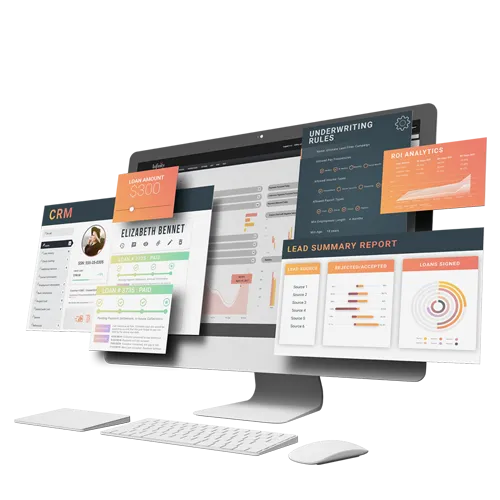
Policies matter, but they are not everything when it comes to underwriting. Because applications need consistent review, and information needs to be accessible at all times. If such discrepancies creep in, no amount of manual input or underwriting practices can help improve business efficiency. Infinity Software helps lenders bring structure to the underwriting process by introducing well-coded loan underwriting software. The platform supports application management, workflow automation, decision support, and loan lifecycle management from a centralized environment.
Infinity Software helps lenders bring structure to the underwriting process, providing the modern lending solutions that organizations need to modernize and control their decision-making operations. If your organization is looking to strengthen underwriting operations, improve decision visibility, and maintain consistency as application volume grows, explore how Infinity’s loan underwriting software can support your lending process.
Conclusion
In conclusion, underwriting is not akin to certainty. Mistakes and errors are bound to happen. Because every decision carries some risk, even if the profile is quite satisfactory. The purpose of underwriting is not to predict the future with complete certainty. No lender can do that. In fact, the real goal is to gather the information that matters, evaluate it carefully, and make an informed lending decision. Irrespective of the process, which may be manual, relying on automated loan underwriting software, or both, the principle always remains the same. Reliable data matters. Consistent standards matter. Portfolio performance matters. That marks the end of this comprehensive text on what loan underwriting is. Keep exploring Infinity Software for more insights.






 <
<