








Why Lenders Are Moving to Hybrid Loan Management Software

Gone are the days when lending was limited to a few organizations. Trends have changed, and with them, the needs for managing loans. In fintech, market equilibrium has become just a wishful phenomenon. Competition is on the rise. Borrowers expect faster solutions and swift approvals. That is where in-person processes lack. Manual overload, scattered data across systems, diverse loan types: all these factors somehow make lending inertia an expected outcome.
Such an economic environment has led many institutions to adopt hybrid loan management software. A system that supports multiple loan types and scales as the business grows. This text preludes the operational limitations of traditional systems and the strategic solutions that the hybrid loan management software offers.
The Industry Shift Driving Change
Expansion Beyond Single-Product Lending
A one-size-fits-all approach is no longer functional. Because lending is no longer limited to a single product. To engage with such would be to engage with a fallacy. Lenders are now diversifying into lines of credit (LOC), small business loans (SMB), auto financing, and other verticals.
Relying on one loan product eventually exposes lenders to market volatility and regulatory tightening. A diversified product mix, however, allows lenders to:
Balance Risk across Portfolios.
Cross-sell to Existing Borrowers.
Stabilize Revenue Streams During Regulatory or Economic Shifts.
Omnichannel Borrower Expectations
Borrowers do not interact with lenders through a single platform. From application intake to disbursement, borrowers engage online as well as in person. For lenders to capitalize on borrowers, they need to ensure:
Consistent Borrower Experience Across all Channels.
Unified Communication.
Real-time Status Updates.
Frictionless Transitions between Channels.
Increasing Regulatory Complexity
Compliance obligations double when expanding into new states and product categories. And speaking of multi-state operations, regulatory requirements and reporting standards keep changing rapidly.
From the regulatory bodies’ perspective, compliance has become more complex than ever. It demands:
Automated Tracking of Regulatory Changes.
Accurate Reporting Across Loan Types.
Centralized Audit Trails.
Transparent Borrower Communication.
Given that, it has become extremely difficult for lenders to rely on a single platform to deal with such compliance requirements. That’s why hybrid loan management software is surely a good choice for lenders aspiring to scale in the lending market.
Why Lenders Are Switching: The Strategic Drivers
Consolidation of Systems
Fragmented systems result in data silos and embedded inefficiencies. Duplicate workflow is no exception. To address such structural problems, lenders need a system that can do so.
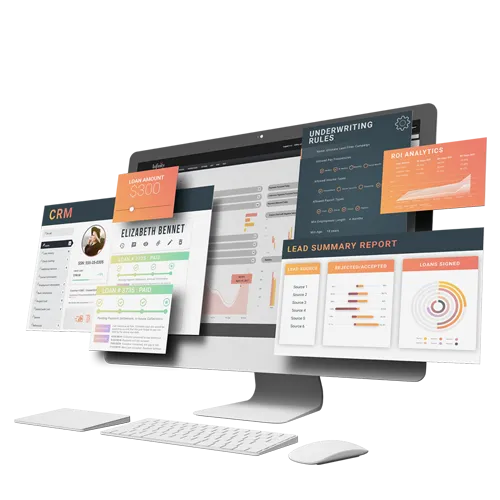
Hybrid loan management software offers a unified solution for operational shortcomings. It consolidates multiple loan products, distribution channels, and processes in a single unified platform. Key benefits of data consolidation through hybrid loan management software include:
Centralized Borrower Data for Underwriting, Operation, and Collection Teams.
Simplified Reporting for Management and Regulatory Compliance.
Use Case
Suppose a lender was previously managing payday loans, installments loan, and small business loans on separate platforms. With hybrid LMS software, the lender can now track all borrower interactions, repayment schedules, and notifications within a single loan management software.
Operational Efficiency
While data consolidation focuses on where data resides, operational efficiency focuses on how lenders use that data. When you are managing multiple loan products, errors are expected. And manual intervention further stalls the operational workflow. Delayed loan approvals, manual repayment tracking, and spending time on reconciling data disrupt decision-making and increase operational costs.
Hybrid loan management software automates all these shortcomings in a single, unified system. Key improvements include:
Automated Loan Workflows Result in Faster Approvals, Transparent Communication, and Reduced Delays.
Unified Repayment Management for Multiple Products without Resorting to Manual Input.
Standardized Compliance Processes for All Loan Types.
Faster Product Innovation
Launching a new product requires the lender's due attention. Traditional systems make launching new products a bit risky and slow. For example, adding a new loan type often requires a separate system or heavy customization. And sometimes, lenders struggle to respond to borrower needs or competitive pressure. A customized hybrid loan management system cuts to the chase. It allows lenders, fintech institutes, and credit unions to launch and manage different loan products single-handedly on one platform.
A hybrid loan management software allows lenders to introduce new loan products by:
Preconfiguring Workflows without Rebuilding the System.
Handling Additional Products.
Automated Compliance Setups for Regulatory Checks and Reporting.
Improved Borrower Experience
Single Borrower Profile.
Consistent Communication Across Channels.
Efficiency for borrowers is speedy approvals. A single platform for all their queries can really eliminate confusing experiences. Most of the time, borrowers have to repeat information across multiple channels. And a lack of status updates results in lost borrowers.
In this regard, hybrid loan management software unifies all borrower data into a single system. The software provides:
Consistent Multi-channel Communication.
Real-time Transparency for Borrowers to Stay Updated on Loan Repayments and Dues.
And a Centralized Borrower Profile Across Channels.
Long-Term Cost Optimization
When handling different channels for different products, bearing high operational costs is inevitable. Each system demands its own integrations, training programs, and maintenance. Hybrid platforms consolidate multiple products, workflows, and channels into a single system, which reduces the financial and operational burden, such as:
Reduced Vendor Overlap, Resulting in Low Licensing and Support Costs.
Lower Integration Burden and Centralized Workflow.
Staff Only Need to Learn and Operate One System, Cutting Onboarding and Training Expenses.
Such measures eventually save lenders a lot of resources.
Explore Infinity: Your Hybrid Loan Management Solution
For lenders looking to scale and tie all together, Infinity Software offers a hybrid loan management software that unifies online and storefront lending. With Infinity, your institution can:
Consolidate Loan Operations in a Single Platform.
Provide a Solution-oriented Borrower Experience.
Reduce Manual Work with Automation Tools to Sync Data in Real-time.
Have Real-time Insights into Performance and Borrower Behavior.
Take the next step. Book a demo and explore how Infinity can help your lending operations grow smarter, faster, and more efficiently.
Conclusion
Economies are changing dramatically. Market trends are shifting. And with them, technology matches the pace. Amidst that, lenders and fintech enthusiasts need a system that saves them the hassle of switching systems now and then. The hybrid loan management software offers a unified platform for both online and storefront lending operations.
From system consolidation to operational efficiency, the hybrid loan management software ensures faster product innovation and a seamless borrower experience. Together, these factors demonstrate why lenders, fintechs, and credit unions are switching to hybrid lending software.






 <
<