








What Is Loan Origination Software (LOS)? Complete Guide
Introduction
Every approved loan begins with a series of decisions. Identity needs verification. Credit data must be pulled. Eligibility rules need to be checked. Risk has to be assessed. Documents must be prepared. Somewhere in that process, the lender has to decide whether the loan belongs on its books. From the borrower's side, it may look like a short form followed by a quick answer. Behind that answer sits years of lending policy, credit strategy, compliance requirements, and operating experience.
Managing those moving parts is the job of loan origination software. Good loan origination software structures that process. It carries an application from initial submission toward a lending decision while keeping the people, data, rules, and records behind that decision connected.
What is Loan Origination Software?
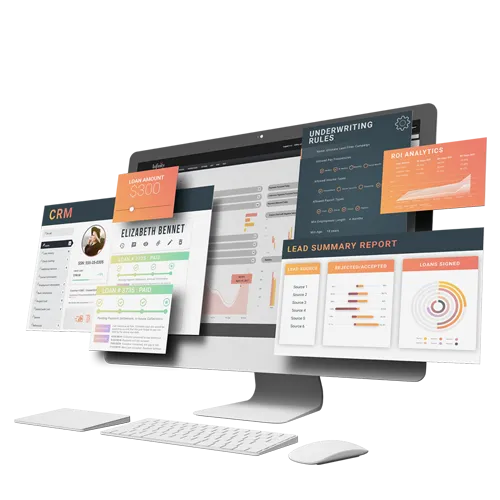
Loan origination software (LOS) is a system that helps lenders manage the process from application through approval and funding. It brings borrower data, verification, lending rules, documents, and decision workflows into one place.
LOS software gives each application a defined path. Borrower information is collected, required checks are completed, and lending criteria are applied before a decision is made. Approved loans can then move toward documentation and funding.
How Does Loan Origination Software Work?
Software transforms raw borrower information into an active loan through a structured digital pipeline.
Application Enters the System
A borrower fills out a digital intake form or applies in person at the counter. The software captures personal details, income statements, and requested loan terms immediately. This action creates a single, unified borrower record inside the platform database, establishing the digital file that guides every subsequent step.
Data Is Verified
The platform validates the applicant's identity and pulls necessary financial background details. Automated connections retrieve credit scores, verify banking activity, and cross-check employment records according to specific lending criteria. Staff spend zero time manually requesting documents when external databases instantly confirm borrower identity and financial history.
Eligibility and Risk Are Evaluated
Basic product qualification differs significantly from true underwriting approval. An applicant might meet minimum age and income thresholds yet still present unacceptable credit risk. The software evaluates the borrower's debt ratio, payment history, and financial stability against configured risk parameters, ensuring the application satisfies exact internal underwriting standards.
A Decision Is Reached
Configured decisioning engines analyze the complete profile to issue an immediate verdict. Standard applications clear automatically, while high-risk profiles route to underwriters for manual review. Unqualified applications trigger instant declination notices. This systematic evaluation maintains lending consistency across every application without delaying qualified borrowers.
Documents and Disclosures Are Prepared
Passing the credit check shifts the file into formal contract preparation. The system generates customized loan agreements, payment schedules, and federally mandated disclosure forms automatically. The applicant reviews and signs these legal documents electronically or at the branch counter, binding the financial agreement.
Approved Loan Moves Forward
Signing completes the origination phase and triggers money disbursement. The platform initiates electronic bank transfers or registers cash payouts at the branch counter. Once funds transfer, the origination file converts seamlessly into an active servicing record, ready for ongoing account management and payment tracking.
10 Key Features of Loan Origination Software
Every feature inside an LOS exists to solve a specific operational bottleneck.
1. Digital Application Management
Messy data at intake corrupts the entire lending pipeline. Digital intake forms capture borrower details in structured formats from the start, populating a clean, central loan record that prevents manual entry errors across future processing steps.
2. Configurable Lending Rules
Credit policy belongs to the lender. Configurable rules allow teams to translate eligibility requirements, product criteria, and internal lending standards into the origination process. Different products or borrower segments can follow the policies established for them without forcing every application down one path.
3. Automated Decisioning
Routine applications should clear without human intervention. Decision engines evaluate standard profiles instantly while flagging unusual financial histories for manual underwriter review. This separation speeds up clear approvals without removing judgment on complex files.
4. Third-Party Data Integrations
Underwriters require fast access to external information during evaluation. Direct data pipelines fetch credit reports, identity records, and bank balances directly into the application file, providing necessary verification details at the precise moment of evaluation.
5. Document and Disclosure Management
Approved applications require binding legal paperwork. Built-in document engines populate state disclosures, payment schedules, and promissory notes automatically. The system tracks signature status and securely archives every finalized agreement within the loan file.
6. Workflow Management
Standard applications pass quickly, but exceptions demand distinct operational paths. Dynamic workflow tools route incomplete files to document collection and flag high-value requests for senior approval, keeping individual files moving along appropriate operational tracks.
7. Payment and Funding Connectivity
Approval means nothing until funds change hands. Direct funding connectivity initiates direct bank deposits or records counter cash distributions instantly. Every payout updates the primary account ledger before the borrower leaves the counter.
8. Compliance and Audit Records
Regulators demand clear proof of fair lending practices. The system logs every action, timestamp, applied rule, and issued disclosure within an immutable audit trail. Lenders pull complete compliance records on demand during internal or external reviews.
9. Reporting and Origination Visibility
Approval rate alone cannot tell managers where an origination operation is struggling. Reporting through modern loan origination software can reveal application volume, conversion, decision outcomes, exceptions, and points where cases stop moving. Those patterns give lending teams something concrete to investigate rather than relying on assumptions.
10. API and System Connectivity
No serious lending operation runs on a loan origination software alone. Credit providers, payment systems, servicing platforms, communication tools, and other technology may need to exchange information with it. Strong API connectivity enables the origination process to operate within the lender's broader technology stack rather than becoming another isolated system.
What to Look for in a Modern Loan Origination Software (LOS)
A long feature list can hide a rigid system. The real test comes when lending policies change, application volume rises, or a borrower does not follow the expected path. Founders and lending teams should judge an LOS by how well it handles the operation they actually run.
When evaluating a system, look closely at:
Configurability: Lending rules change. Your team should be able to adjust criteria and workflows without rebuilding the operation around the software.
Integration Depth: Credit bureaus, verification providers, payment systems, and other services should fit into the lending process without creating data gaps.
Exception Handling: Straightforward applications are easy. Pay attention to how the system handles missing documents, referrals, and cases that require human review.
Operational Visibility: Managers should be able to see where applications slow down, why they stop, and what needs attention.
Product Flexibility: Different loan products may require different rules, terms, and workflows.
Scalability: Higher application volume should not demand the same increase in manual work.
Servicing Handoff: Origination eventually ends. The borrower relationship does not. Approved loan data should move cleanly into servicing without forcing teams to rebuild the account.
Why Infinity for Loan Origination?
Origination works better when it does not become another operational island. Infinity Software connects the work between application and funding within a broader loan management platform. Lenders can capture borrower applications, manage documents, verify applicant information, and configure approval workflows around their own lending rules. Direct integrations with credit bureaus, payment providers, banking systems, and other third-party services keep the information needed for a decision within reach.
For lenders managing several products or growing application volume, that continuity matters. Infinity keeps origination connected to the loan lifecycle that comes after it.
Conclusion
Every funded loan begins as an application. What happens between those two points determines far more than approval speed. Strong origination starts with reliable data, follows clear lending policies, and gives borrowers a process they can understand. Just as important, it creates a complete loan record for the teams that take over after funding. For lenders, that continuity matters. A sound origination process gives servicing better information, keeps lending decisions disciplined, and provides the portfolio with a stronger starting point. Good loans are managed for years. Their foundation is built at origination.






 <
<