











What is Online Loan Management Software? A Complete Guide
Lenders have become more demanding. Not because the fundamentals have changed. But because resources that were deemed fulfilling are not really cutting to the chase in long-term lending solutions. In fact, they are experiencing a sharp increase in responsibilities. Fewer guardrails mean lenders must pay closer attention to internal risk management and underwriting discipline, among other requirements.
That is when modern technology, such as online loan management software, comes into play. While designed specifically for lenders, credit unions, and MFIs, online loan management software holds the post-funding operations together. In this guidebook, we will explore what an online LMS is, how it works, and the factors lenders should consider when choosing one.
What is Online Loan Management Software?
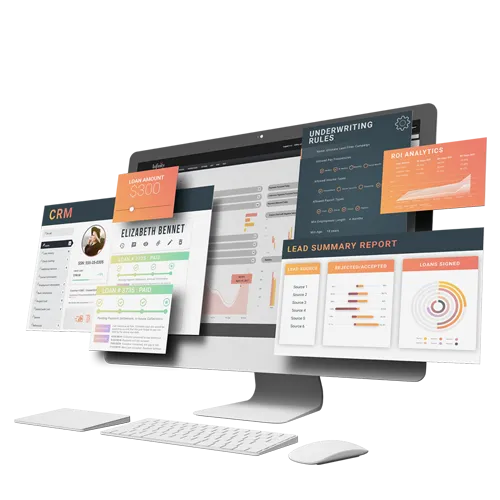
Online loan management software is a digital lending solution designed to manage the entire loan lifecycle. It replaces manual processes with structured workflows, ensuring that lending operations are consistent, controlled, and scalable.
Lending did not start digitally. It began with paperwork, spreadsheets, and people manually managing lending operations. Surprisingly, a large number of lenders run their business on tools that were never meant for lending at scale.
However, online loan management software fills the gaps just stated above. This digital system manages everything that happens to a loan after it is approved. It controls:
How Loans are Set Up
How Repayments are Scheduled
How Interest and Fees are Calculated
And How Delinquencies are Handled
In practical terms, the software outperforms every spreadsheet, every piece of paperwork, and every manual intervention involved in lending operations. Because the system is designed for scalability, it supports automation, integration with banks and payment processes through APIs, and rules embedded for different loan products. That means, without this software, lending tends to become more manual and fragile.
How Does Online Loan Management Software Work?
Instead of manual handoffs and isolated decisions, the system ensures that each stage is executed consistently, with full visibility and control. This shift is what allows lenders to move from reactive operations to predictable models. Below is the step-by-step process that thoroughly explains how the online LMS actually works.
Digital Intake and Verification
The process starts when a customer applies for a loan. Instead of relying on in-person or manual verifications, the software pulls the borrower's data from their respective bank accounts, tax records, or payroll providers. Every document provided by the borrower is verified in real-time. For instance, required fields, formatting rules, and basic checks prevent incomplete applications from entering the system.
Credit Assessment & Risk Evaluation
This is where the software determines whether the borrower is creditworthy or not. For context, a borrower's creditworthiness depends on several factors. Be it previous loan and repayment history, monthly income to meet monthly loan installments, or behavioral data, the system can integrate with financial institutions and credit bureaus via APIs, depending on the provider.
Rule-Based Evaluation
Through predefined policies, the online loan management software automatically evaluates borrowers. By evaluation, we mean the borrower fulfills all the mandatory data required to be eligible for a loan, such as the collateral rule, income threshold, and credit score. Applications that clearly fail basic criteria are filtered out instantly. As a result, instead of guesswork, decisions are more aligned with future outcomes, faster, and consistent.
Approval/Rejection
Once risk evaluation is done, the decision-making stage comes in. We also call it underwriting. Underwriting is when the loan is either approved or rejected based on the borrower's credit score and the borrower’s overall repayment history.
For straightforward cases, the system can auto-approve loans based on predefined rules:
Approved Amount
Interest Rate
Tenure
Fees and Repayment Schedule
At this stage, human insights still play a significant role. For instance, credit officers can apply manual overrides to adjust key terms such as the loan amount, pricing, tenure, or collateral requirements. That creates a clear audit trail and ensures accountability without slowing the process down.
Disbursement and Repayment Tracking
After approval, the online loan management software moves the application to the execution phase. This is the stage when funds are released, and loans become live. At this point, precision matters most. Not because the operation teams end up paying a larger loan amount to the borrower. But because any mistake here drastically impacts customer trust, schedules, and balances.
Once the software configures the borrower account, it then triggers disbursement through integrated payment channels. Through these channels, the amount set transfers directly to the borrower’s account, wallet, or card. Such automation saves operations teams plenty of time as no reconciliation is required once the funds are disbursed.
Repayment Management & Collections
The online LMS tracks loans in real time. The software knows exactly when the payment is due or late. It automatically analyzes how much amount is owed and what portion of repayment should go toward principal, interest, or fees. With such automation, lenders maintain control of their portfolio.
Sending Reminders and Notifications
Also, in case the borrower fails to pay on time, the software triggers an action. Instead of following up with the borrower through manual communication, the online loan management software initiates an automated reminder to the borrower. The reminder includes emails, messages, and delayed repayment notifications.
Policy-Driven Recovery Workflows
And for more serious delinquencies, the online LMS provides collectors with a complete history of the loan, including payment behavior, communication logs, and risk signals. The goal here is to make outreach more informed and consistent. This prevents aggressive or random follow-ups and replaces them with structured, policy-driven recovery workflows.
But knowing how an online loan management software works is just one side of the picture. The real shift begins when lenders understand how this cutting-edge technology can help them catch the low-hanging fruit.
Key Features of Online Loan Management Software
Technology is evolving, and so are the economic conditions. Businesses and the fintech industry alike do not need anything that may affect the growth trajectory. What they need is a system. A system that can help them scale without adding manual overhead. Given that, lenders must know how loan management software can help them achieve that milestone.
End-to-End Loan Lifecycle Control
There is a thin line between managing loans and actually running a loan portfolio. In an environment where manual input is the core driver of loan management, operations tend to become sloppy. Not because teams are inefficient or error-prone. But when a loan is approved, a plethora of things start happening at once: account creation, repayment scheduling, and interest accruing. In manual or semi-digital setups, these exceptions become the norm.
A well-coded loan management software outdoes these anomalies. From the moment the loan is approved, the online LMS software decides how the entire lifecycle will behave: how payments will be split between principal and fees, how late charges trigger, and how restructures or early payoffs are handled.
With end-to-end loan lifecycle control, lenders can ensure consistent borrower treatment and reduce operational risk from undocumented exceptions. This means every loan follows a single, enforceable logic. Humans only step in when something truly needs judgment.
Automated Payment Allocation & Accounting Accuracy
Nothing hurts more than not having an idea where the money went. And this is an expected outcome when payments come in from everywhere, including bank transfers, cards, wallets, payroll deductions, cash, and agents. All these payments, when they hit the spreadsheets, someone has to deal with them manually. That is the point when error becomes 'when' from ‘if’.
With automation, however, lenders can remove human interpretation from financial matters. The online loan management software manages every incoming payment according to pre-defined rules and policies. From principal, interest, and penalties to fees and escrow components, the online LMS software decides how each dollar is split instantly.
Use Case
Imagine a borrower underpays or, luckily, overpays. The online LMS would not need to switch tabs or do CTRL+F in spreadsheets. Instead, it will just apply funds in the correct priority order and calculate the impact on the schedule automatically. This automation, as a result, creates accounting accuracy.
Configurable Loan Products & Pricing Rules
For lenders tired of defining rules time and again, the LMS software allows them to define the loan products once and let them be enforced forever. This includes everything that usually remains in emails or policy manuals. For instance, the LMS can manage the following:
Interest Calculation Methods
Fee Structure (Determining which Fee Structure Applies at Origination or Closure)
Tenure Ranges
Collateral Requirements
With this integration, lenders make sure that every loan is processed consistently. Not only does this save the hassle of seeing when and who approved the loan, but it also adapts quickly. For example, you will not have to rebuild the process for every new loan type or when fees change. All it takes is a configuration update, and the system enforces the rules across all new loans.
Delinquency Management, Collections & Recovery Automation
Overdues happen every day, resulting in cash flow problems and operational costs. This is obvious. Lenders allocate manual resources just to track delinquencies and follow up for collections and payment recovery. As hectic as it seems, the loan management software changes that by combining these elements into a single automated workflow.
The embedded algorithm prioritizes accounts based on risk and behavior. For context, a borrower’s account with frequent late or missed payments is more likely to be highlighted as delinquent than a borrower who has just missed their first repayment. Previously, operations teams had to flag delinquencies on their own and record data.
A modern loan management software with its capability to manage, collect, and recover payments single-handedly can ensure a structured, predictable, and auditable operation. Lenders, in turn, gain real-time visibility into portfolio health, reduce losses from late payments, and maintain better relationships with borrowers.
Reporting, Analytics & Compliance Controls
Modern online LMSs do not operate on guesswork or human judgment. Whatever rules and policies lenders feed them, they act on them. At present, if not all, many lenders are still utilizing manual workflows to increase efficiency. Manual workflow does enhance efficiency only when combined with technology.
Lenders have this insight that nothing damages operations more than fragmented data and inconsistent compliance checks. And nothing works best when all these loopholes are steered by a loan management software. The LMS captures every transaction, repayment, and adjustment in real-time. This provides lenders with immediate visibility into the health of their portfolios: which loans are performing, which are at risk, and where operational bottlenecks exist.
Compliance Framework
Given the surge of AML/KYC scrutiny, financial institutions are being asked to do more, i.e. deliver a competitive digital experience and meet stricter regulatory requirements. And they are right to be asked for. With technological advancements, the risk of fraudulent activities has increased significantly in recent years. You cannot stay compliant while relying solely on manual guardrails.
Loan management software, against this backdrop, strictly follows enforced rules and policy documentations and automatically enforces anti-money laundering checks at every stage of the loan lifecycle.
Together, reporting, analytics, and compliance allow lenders to gain confidence that their numbers are accurate, their portfolios are monitored, and their operations are auditable.
Benefits of Using an Online Loan Management Software
In lending, growth only matters when it is sustainable. Technology ensures sustainability. That said, this section includes enough insights for lenders, decision-makers, and operations managers.
Improved Portfolio Performance & Cash Flow Stability
A portfolio is said to be the backbone of clear and transparent reporting. Expanded portfolios do look good on paper. But what lurks underneath is far more chaotic: fragmented data, uneven repayments, and unpredictable revenue. As a result, forecasting becomes difficult. Planning turns out to be foggy.
Built through advanced technology, the LMS software brings structure and clarity to the data. Lenders gain insights into sustainable growth and profitability. Apparently, when repayment schedules, pricing logic, and recovery workflows work in harmony, cash inflows become more predictable.
This eventually results in a portfolio that is consistent throughout the economic cycle. Everything, from identifying at-risk segments to reinforcing strong-performing accounts, is deployed with a clearer expectation of return.
Faster Time-to-Market for New Loan Products
Markets change more quickly than one can anticipate. New borrowers emerge, and with them, the need to launch a product that aligns with their income patterns or risk profiles. So, whether the product is for a new borrower segment, to make a shift in interest rates, or for regulatory change, lenders wish to act swiftly without interrupting the operational workflow.
An online loan management software reinforces that agility. Through structured configuration, lenders can design, test, and roll out new loan products. From pricing policy to repayment logics to fee policies, the software aligns everything with precision and accuracy.
And that is only half of it. This alignment with lender-defined rules allows product teams to focus more on new offerings and data refinement and less on paperwork. For lenders, the online LMS software helps capture market demand and stay relevant as the market shifts.
Better Borrower Experience Without Lowering Risk
Lenders are often caught between maintaining strict credit standards and retaining customers. The tension is real, especially when you have to push hard on convenience and risk at the same time.
An online loan management software outdoes this tension. From the borrower’s perspective, for instance, they get complete control of their repayment schedules, balance updates, and communication. That means enhanced customer retention and trustworthiness of the lending institution.
As far as lenders are concerned, the online LMS software enforces eligibility rules, pricing logics, and recovery policies systematically. In other words, the LMS allows lenders to be both customer-friendly and risk-conscious at the same time, without choosing one over the other.
Stronger Risk Control & Loss Prevention
Risk is at the heart of financial operations. Both parties, lenders and borrowers, wish to prevent any risk or loss whatsoever. However, things are not that simple when it comes to loan management. Because risk happens when the loan is live. If early warning signs are overlooked, risks turn into losses.
An online loan management software structures everything from pre-funding stages to post-funding operations. Be it delayed repayment or restructuring requests, the software highlights these abnormalities when the action is still possible.
This allows lenders to shift from damage control to prevention. At-risk accounts can be addressed before they become non-performing. Recovery strategies can be applied proportionately. Exposure limits can be enforced dynamically as the portfolio evolves.
Audit-Ready Operations & Regulatory Confidence
If nothing else, online loan management software at least invokes regulatory confidence. With compliance checks becoming stricter and stricter, ensuring audit-ready operations has become a must.
A well-coded online loan management software strengthens risk control by making discipline continuous. It records every approval, adjustment, payment, and exception automatically. This, as a result, creates a transparent audit trail and not something created after the fact.
More importantly, regulatory confidence enables growth. Institutions that demonstrate strong controls attract better funding partners, face fewer operational disruptions, and build long-term credibility in the market.
How to Choose the Right Online Loan Management Software
Selecting an online loan management software is not a technology decision. In fact, it is more about alignment and fit. Experts know policies, rules, and compliance frameworks, among others, are institution-owned factors. You cannot pick an LMS randomly. A thorough analysis of one’s own bank, credit union, or MFI before going to technology is a must. Let’s cut the crap and understand the factors that lenders must consider while choosing an online loan management software.
Fit With Your Lending Model
Every lending model is different. Every bank, credit union, or MFI has its own set of rules and policies. Some lenders focus on consumer loans, and some deal in payday or auto title loans. If the software does not naturally support the structure, you may end up working around it, instead of with it.
A strong online LMS supports your lending operations in three dimensions:
Product Structure Alignment: This is non-negotiable. The software should support your real loan product, not only the generic one. That includes:
Different Tenures and Repayment Schedules.
Variable Interest Methods (Flat, Reducing, Hybrid).
Fees, Penalties, and Grace Periods that Match your Policies.
Risk & Pricing Logic Fit: As stated earlier, your credit decisions reflect your business strategy. That said, online LMS software must support:
Risk Tiers and Borrower Segmentation.
Pricing Based on Risk, Income, or Behaviour.
Rule-based Approvals with Controlled Overrides.
Repayment & Servicing Reality: Your LMS should handle:
Your Real Payment Channels and Cycles.
Your Actual Delinquency Rules.
Your Recovery Workflows.
Control vs Flexibility
Lending works best when everything is under control. And software is said to be efficient enough if it strengthens the lending flexibility. For lenders and decision-makers, lending operations must be carried out in a controlled environment. Control to protect capital, compliance, and consistency.
Operational Control
Operational control means who can do what. When it comes to loan management, roles are clearly assigned between the operation teams. And lenders want tight control of who can change loan terms or who can move money. If the software allows every person to fix the problem quickly, you are losing control of your non-negotiables.
Product & Rule Flexibility
Adaptation is the key when choosing an online LMS. For instance, if you have to launch a new loan product or change a pricing policy, the online LMS should allow business teams to configure products, rules, and workflows safely.
Scalability & Performance Under Growth
Growth in lending means increased loan volume. More loan applications, more borrowers, more repayments, and more pressure on the system. Under such an ascending trajectory, a strong online LMS should be able to grow with your business. Here’s what that looks like in practice:
Volume Handling without Slowdowns: A well-developed LMS should evolve as the portfolio expands. From processing thousands of applications without lag to generating reports without freezing, the online LMS is expected to pivot steadily without dropping performance.
Automation That Scales With Complexity: As the volume increases and the portfolio expands, the software should support this by running complex logic automatically and applying rules consistently at any size.
For lenders, decision-makers, and financial institutions looking for online loan management software, they need to look for a platform that can handle traffic spikes and stay reliable during peak periods.
Compliance & Governance Readiness
Next comes the predicament of choosing the online LMS from the compliance perspective. Regulations are tightening. Rules are becoming more complex than ever, given the advancement in technology. So the question is no longer about what you did but how and why you did it. That is when compliance and governance become non-negotiable.
Lenders and decision-makers alike should look for a system that can run defensible operations. Hence, a strong online loan management software should:
Have Built-in Policy Enforcement.
Embed Compliance Checks, such as KYC/AML, and Documentation Control.
Have Rule-based Access Control and Secure Handling of Borrower Data.
Implementation & Long-Term Partnership
The online loan management software ought to configure your loan products and migrate your old data. This implies that when you are choosing the online LMS, you are not only buying the tool. Instead, you are building a long-term, working relationship with the vendor. In view of this, this is what lenders should evaluate while choosing the LMS software:
Who Should Use Online Loan Management Software?
Broadly speaking, in finance and banking in particular, control, visibility, and efficiency are the prime objectives. Lenders want to maintain control over their operations and data. They want to be perceived as someone trustworthy. The online loan management software, in that regard, provides that leverage.
Online-First & Digital-Native Lenders
With everything going digital, digital-native lenders, including online-first and fintech startups, have to deal with a high volume of loan applications. Since that is the case, an online loan management software is an ideal solution for managing a high volume of application turnover and complex underwriting tasks. Other actors who should actively utilize the online loan management software include:
Fintech Startups Scaling Fast
Banks & Credit Unions
Microfinance Institutions & NBFCs
Now that we have covered everything from what an online LMS is to its functions, features, and benefits, let’s move forward to the implicit and explicit challenges lenders face while implementing it.
Challenges of Implementing an Online Loan Management Software
Implementation demands planning, coordination, and adaptation. But with great success comes great challenges. Speaking of success, it does not rely solely on technology. People, processes, and organizational culture play a significant role in the implementation process. That said, lenders should be mentally prepared to face technical hurdles, workflow disruptions, and compliance complexities in the process.
Data Migration & System Integration
The biggest challenge for online-first lenders is migration when implementing the new online LMS. Because lenders do not have to start from scratch. They already have data scattered across spreadsheets or in old software.
The challenge is moving all that data correctly without errors, duplicates, or missing information. If, by any chance, integration breaks, it is not only the operational flow that stalls, but the reporting also turns out to be unreliable, let alone trust erosion and losing a potential borrower. So it is a challenge because it is technical, high-stakes, and requires precision during implementation.
Change Management & Staff Adoption
People who have to use the software are at the heart of implementation. And this is one of the biggest challenges institutions face when migrating. Since the staff or operation team is not used to the new software, habits and comfort zone stall the workflow. That is why lenders need to train the staff accordingly and ensure cross-team collaboration to avoid risking missed tasks.
Without effective change management, the online LMS risks being underutilized, partially implemented, or ignored, turning a high-investment tool into a wasted resource.
Workflow Customization & Complexity
The more complex your loans are, the harder it is to set them up. Every lender has different rules for loans. Sometimes interest rates vary, and more often repayment schedules differ. If the newly implemented software considers only the standard cases, exceptions cannot be processed properly.
For instance, a borrower requests an early repayment, or the loan needs restructuring. Now, if these rules are not configured with due attention and care, the software can miscalculate fees or generate inaccurate reports. In short, the complexity of workflows and the need for careful customization make implementation a significant challenge, even for technically robust LMS platforms.
Regulatory Alignment & Compliance Setup
We have mentioned it time and again in this article how important it is to stay compliant. Compliance requirements are evolving dramatically. Staying ahead of those regulations is a must for lenders.
However, it is not that simple, as it seems. Implementing a new online LMS software means embedding all those regulations in the system. The software must enforce compliance protocols such as KYC (Know Your Customer), AML (Anti-Money Laundering), and interest caps across all loan products.
Failure in doing so may result in penalties, non-compliance, and reputational damage. Other additional challenges that may affect the flawless operational flow include, but are not limited to:
Security and Cyber Risk Concerns
Data Quality and Standardization
Performance and Downtime Risks
Reporting and KPI Setups
Maximize Portfolio Performance with Infinity’s Online Loan Management Software
Infinity Software is more than a service provider. With its online loan management software, lenders can:
Tailor Loan Types to Meet Borrower Needs
Duly Comply With State-Specific Regulations
Approve Loans Swiftly with Automated Underwriting and Credit Checks
Close Deals Quickly and Disburse Funds Securely with Integrated E-Signature and Payment Solutions.
If these distinguished features speak to you, book a demo and take your lending operations to another level of scalability, efficiency, and automation.
Looking Ahead
To conclude, lending is no longer defined by paperwork or manual input. In fact, it is more about speed and control. Evidently, online LMS bridges the gap between delayed approvals and speeding up lending operations. From real-time portfolio insights to configurable loan products, the software continues to evolve beyond basic automation.
So, the question is less about adoption and more about how strategically lenders implement it. Lenders that still rely on manual or semi-digital processes may find themselves struggling to keep up with market demands and regulatory scrutiny.






 <
<