










How BNPL Providers Can Reduce Credit Risk and Prevent Fraud
Introduction
The biggest problem when a customer chooses to buy now, pay later lending isn't the approval; it's managing what happens after the purchase. You may approve purchases, and the merchant may complete the sale. But who do you blame when one borrower misses a payment, another disputes the transaction, and a third uses a stolen identity? For every BNPL provider out there, these problems have different financial consequences. It doesn’t matter how many purchases you are approving or how fast your checkouts are. If credit losses and fraud eat into the revenue, profitability becomes a forlorn hope. And by the time repayment problems appear, the provider has already taken on the risk.
With buy now, pay later loan management software, vendors can have insights into repayment activity. Loan accounts. Related workflows. The challenge lies in controlling risk without making legitimate customers pay the price through unnecessary checks.
Understanding Credit Risk and Fraud in BNPL Lending
In lending, uncertainty is the norm. You can never be fully assured when and why a borrower misses repayment. And that doesn't necessarily mean a missed installment is an intentional act. Sometimes, life happens. A borrower may have lost income or taken on more debt. That, by the way, is credit risk. Fraud, on the other hand, is a different matter. It involves deception, often before the first payment is even due.
For BNPL providers, knowing the difference matters because the same warning sign can point to very different problems.
Credit Risk | Fraud Risk |
A genuine borrower fails to repay. | Someone uses deception to obtain credit or make a purchase. |
Often involves financial hardship or repayment capacity. | May involve stolen identities, account takeover, or false information. |
Assessed through credit information and repayment history. | Assessed through identity checks and suspicious transaction patterns. |
Can lead to delinquency or default. | Can lead to fraud losses, disputes, or unauthorized transactions. |
Passing an identity check does not prove someone can afford the installments. Likewise, a late payment is hardly evidence of fraud. Both risks demand different controls. To curtail the uncertainty, buy now, pay later loan management software can really help lenders keep track of every funded loan till the last installment is paid.
Where BNPL Providers Face the Greatest Risk
Digitization is skyrocketing. And the BNPL medium serves in the best interest of borrowers. Losses creep in when risks are difficult to spot at checkout. Because, given the BNPL nature, many risks emerge after the purchase. The earlier you recognize or identify the problem, the less the cost will be.
Limited Visibility Into Existing Borrower Debt
And this is probably the most common reason as to why BNPL providers are almost always at risk. When you overlook a borrower’s existing BNPL plans, insights take a back seat. Lenders just review a new application and might not see all those obligations. The Consumer Financial Protection Bureau (CFPB) has found striking numbers. According to the organization’s data, about 63% of borrowers in its 2021–2022 dataset took out overlapping BNPL loans during the year. To be clear, multiple loans don’t automatically mean financial trouble. But incomplete information can lead providers to approve purchases without knowing the borrower's full repayment burden.
Identity Fraud and Unauthorized Transactions
Someone uses stolen personal information to make a purchase. Another gains access to an existing customer account. The transaction may clear the checkout, but the trouble comes later. Disputes, investigations, and potential fraud losses can turn an approved sale into an expensive one.
Missed Installments and Failed Payments
As mentioned earlier, borrowers also have a life. One missed repayment doesn’t reflect an unwillingness to repay. Maybe the borrower has insufficient funds. He may have an expired card. But at the same time, someone must address the setback. For example, providers can make repeated attempts or do follow-ups. And if those tasks eat into more important work, lenders can use buy now, pay later software to move the lending process forward.
Repeat Borrowing Without Reviewing Repayment Behavior
Every lending lifecycle starts with identity verification. A look into customers’ repayment history. Suppose a borrower completes one BNPL purchase and comes back for another. This sounds good, but what if installments from a previous loan have remained unpaid? That repayment behavior says a lot about whether the applicant is eligible or not. Therefore, before approving the loan, it is in the best interest of lenders to consider the remaining balance in the account and repayment history.
How BNPL Providers Can Reduce Credit Risk
Credit risk cannot be judged by how quickly a borrower completes checkout. What matters is whether the customer can repay the installments and how much exposure the provider is willing to accept.
4 Key Practices for Better Lending Operations
Underwrite for Solvency, Not Checkout Speed
A borrower can easily pass an automated screening for a five-hundred-dollar order and still have an empty bank account. You cannot lend on an identity check alone. Look at real capacity. Check visible credit lines, existing installments, and current bank balances where the law permits. A clean approval that turns into a default thirty days later is simply bad banking.
Track your early delinquency rates by approval band. When payment one fails, look at the scoring tier that lets it through. The ledger will tell you exactly which cutoffs were set too low.
Tie Credit Limits to Real Risk
Do not give a stranger the same line you give a customer who has settled five loans on schedule. Keep initial exposure low for new buyers. Cap their total balance across all open carts, not just the single order in front of them. When they prove they can handle the schedule, expand the limit. When they slip, pull it back.
Monitor charge-offs across each credit band. If the five-hundred-dollar tier bleeds money while the two-hundred-dollar tier stays clean, your ceiling is wrong. The data will show you where the floor breaks.
Read Your Own Ledger
A returning customer brings something better than an outside bureau score: their actual track record with your cash. If a buyer cleared four installments without a single hitch, they earned their next purchase. If they needed three payment attempts and entered the grace period on their last cart, do not look away.
Treating a returning borrower like a brand-new stranger wastes the most accurate data you own. You already paid for that information with your balance sheet. Use it before you approve more exposure.
Chase Failed Charges Before the Trail Goes Cold
Cards decline for two very different reasons. The plastic expired, or the account is empty. Treating them as the same problem wastes time and frustrates honest people. Route expired cards straight to an update prompt. Route insufficient funds to a smart retry schedule timed with common paydays. Send a short, plain text right away.
Watch your recovery curve against days past due. If you do not recover an installment in the first week, the odds drop off a cliff. Work the balance while it is fresh, or prepare to write it off.
How BNPL Providers Can Prevent Fraud Without Slowing Every Transaction
The question is not about what buy now, pay later loan management software lenders should implement. The question is how to adapt BNPL software to protect against fraud. This happens more often when borrowers get caught in the checks meant to protect them.
Verify Borrower Identity Before Extending Credit
At checkout, even a stolen identity seems like an achievement. You get accurate information, the right address, and other personal details. Little do you know that the person applying has no right to use them. When teams go deep into identity checks, they can find out beforehand who is actually behind the purchase. Buy now pay later loan management software can save you a lot of hassle in this regard. The software automates approvals after automated identity verification under Know Your Customer (KYC) protocols.
Catching Irregular Application and Order Behavior
A borrower applies three times in an hour from the same phone. Another changes their surname and street address between attempts. An account that bought cheap books for two years suddenly buys three smartphones at midnight.
None of this proves theft on its own. Devices get shared, and typos happen. But when suspicious signals pile up, risk multiplies. You do not block the user outright on a single mismatch, but you hold the approval until the pattern makes sense. Ignoring these clusters leaves the door open to coordinated attacks and synthetic identities.
Targeting Verification Where the Exposure Lies
If anything, taking every applicant as someone suspicious ruins conversion. The process is simple. If a prospect has a spotless repayment record and applies for a loan, the first job is to clear the transaction. Yes, identity checks are important. But they should be brief. You cannot afford to force applicants through multi-step identity checks and expect them to go through all.
The best practice is to save the assessment for genuine uncertainty. When a new user appears with an out-of-state IP address, an unverified prepaid phone, and high cart value, step up verification. Require a bank login, an ID scan, or a one-time passcode. You don't lock the front door to everyone; you reinforce the entry points where fraud signals actually spike.
Measuring Loss Rates Against False Rejections
A security dashboard showing thousands of blocked checkouts looks impressive, but raw numbers hide the truth. If your rules blocked ten thieves alongside forty honest shoppers, the rule failed. Lost merchant volume often hurts the bottom line more than the fraud itself.
Run regular post-mortems on your filters. Track your chargebacks, false positives, and manual review logs against actual losses. A fraud strategy is never static; you loosen rules that choke revenue and tighten rules where actual losses slip through the net.
Why Repayment Management Matters After BNPL Approval
Contrary to what is believed, lending starts after the funds are approved. Because getting an application approved is one thing. Collecting every installment is another. And given the uncertainty, there is more than one way it can go south between the first payment and the last. For the record, that is not limited to borrowers who passed the initial checks. A case in point is a borrower's expired card. Imagine his card expires one day before the installment date. When servicing teams somehow fail to keep accurate account records, it becomes difficult to identify the root cause of missed payments.
This is where buy now pay later loan management software comes in. With its ability to track the account and scheduled payments, the software notifies borrowers when the repayment is due. Collections teams can also monitor overdue accounts and arrange follow-ups where permitted.
How Infinity Software Supports BNPL Lending Operations
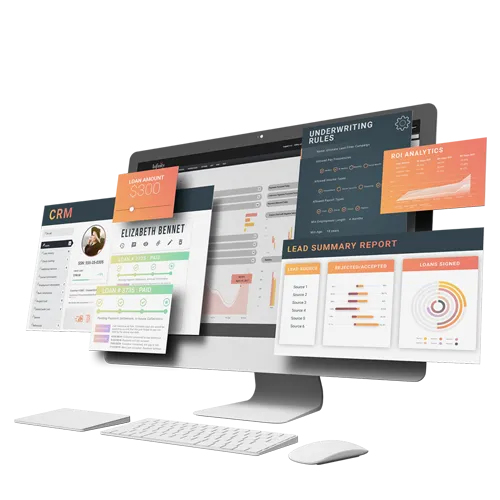
When it comes to BNPL, clear tracking is all that matters. As a BNPL provider, you may approve transactions instantly. But that is not even the cherry on top. In fact, that is the point where actual lending begins. And Infinity Software brings these complexities into a single end-to-end loan management software. With its buy now, pay later loan management software, lenders can approve qualified retail consumers instantly during checkout, allowing buyers to finalize transactions without disrupting their shopping experience.
Not only that, the platform allows you to design tailored short-term payment plans, such as bi-weekly splits, that accommodate diverse consumer budgeting preferences perfectly. The BNPL software also includes leverage for collection and servicing teams. Not only does the software help teams manage missed installments, but it also performs follow-up activities.
So, if you are someone handling a pile of short-term installment loans, Infinity’s buy now pay later loan management software can be your best shot. Implementing BNPL software will reduce time spent managing separate processes and give you more control over what happens after approval.
Explore how Infinity Software can support your BNPL servicing, payment tracking, and collections operations.
Conclusion
In short, technology is advancing. What was considered a delusion has become a living reality. And amidst that technological growth, lending is also experiencing significant advancement. Akin to other lending programs, BNPL does not start when a prospect completes an application. The real game changer is what comes after that. After funding, lenders must collect installments and keep the borrower's account accurate. Although manual effort has a say, keeping everything in a single platform without buy now pay later loan management software is quite a task. The right software helps maintain that control, from the first repayment to the final installment.






 <